Description

Cases in Precision Oncology: Fanconi Anemia and Cancer Risk: What Clinicians Need to Know
Tuesday, August 25, 2026
11:00am-12:00pm ET
www.acmgeducation.net
1.0 AMA PRA Category 1 Credits™, P.A.C.E.® - Educational Credits Claim by September 30
This CME Case Series reflects the work of molecular tumor boards by featuring an interdisciplinary discussion of cases that are subject to comprehensive molecular characterization using a variety of advanced technologies. In this session, cytogeneticist Dr. Betsy Hirsch, Director of the UMMC Cytogenetics Laboratory and the Masonic Cancer Center's Cytogenomics Laboratory at the University of Minnesota, will explore the underlying biology, clinical presentation, and genetic features of Fanconi anemia. Drawing on her research in chromosome instability and the cytogenomic landscape of myeloid and lymphoid neoplasms, Dr. Hirsch will discuss methods for diagnosing Fanconi anemia, differentiating its subtypes, and monitoring for clinically significant clones that may signal the emergence of myelodysplastic syndrome, leukemia, or solid tumors. Through case-based discussion, participants will examine how cytogenetic and molecular findings inform diagnosis and guide clinical decision-making for patients with this condition.
Target Audience
All medical and healthcare professionals and researchers interested in understanding cancer genomic testing and somatic and germline variant interpretation methods. This series is presented as a collaboration between ClinGen Somatic, VICC, and ACMG consortia.
Agenda
Presentations followed by live Q&A.
Learning Objectives
At the conclusion of this session, participants should be able to:
- Describe the clinical presentation of a patient with Fanconi anemia
- Evaluate genetic aberrations associated with Fanconi anemia
- Apply and extrapolate concepts to use in their own practice
Meet the Faculty
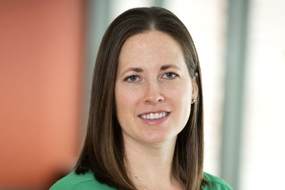
Betsy Hirsch, PhD, FACMG
Professor, University of Minnesota, Department of Laboratory Medicine and Pathology
Planning Committee:
Beth Pitel, MS, CG(ASCP)
Gordana Raca, MD, PhD, FACMG
Manuela Benary, PhD
Jason Saliba, PhD
Staff:
Jane Radford, MHA, CHCP
Kim Vadas, MABMH,CHCP, FACEHP
Accredited Continuing Education Information
AMA PRA Category 1 CreditTM, ASCLS P.A.C.E.®
Accreditation
The American College of Medical Genetics and Genomics is accredited by the Accreditation Council for Continuing Medical Education (ACCME) to provide continuing medical education for physicians.
Credit Designation
The American College of Medical Genetics and Genomics designates this live activity for a maximum of 1.0 AMA PRA Category 1 Credit™. Physicians should claim only the credit commensurate with the extent of their participation in the activity.
ASCLS P.A.C.E.® CEU's
ACMG is approved as a provider of continuing education programs in the clinical laboratory sciences by the American Society for Clinical Laboratory Science (ASCLS) Professional Acknowledgment for Continuing Education (P.A.C.E.®) Program.
ACMG is approved by the Florida Board of Clinical Laboratory Personnel as CE Provider (50-11878)). This course is registered with CEBroker # 20-1320630. ACMG is approved by the California Department of Health Services through the ASCLS P.A.C.E.® (275-300-25). This activity has been approved for 0.1 P.A.C.E.® CEU's.
Claiming your Educational Credits
Complete the activity and carefully complete the evaluation form. The deadline to claim educational credits is within 30 days from the date of the activity. Educational credit requests after this date will not be accepted.
Learner Data Consent
ACMG Education reports learner data to respective agency boards and you will be asked for consent during the evaluation process. Your compliance with deadlines and completing evaluations are part of the process in meeting learner needs and ACMG’s education mission.
Technical Support:
You can reach us by email at education@acmg.net or call 301-718-9603.
Support Center Hours: Monday – Friday, 9:00 AM – 5:00 PM Eastern Time.
Financial Disclosures
Accredited Continuing Education Financial Disclosure
The American College of Medical Genetics and Genomics (ACMG) is accredited by the Accreditation Council for Continuing Medical Education (ACCME) to provide Accredited Continuing Education (ACE) for physicians. ACMG is an organization committed to improvement of patient care and general health by the incorporation of genetics and genomics into clinical practice.
ACMG has implemented the following procedures to ensure the independence of ACE activities from commercial influence/promotional bias, the Accreditation Council for Continuing Medical Education (ACCME) requires that providers (ACMG) must be able to demonstrate that: 1) everyone in a position to control the content of an ACE activity has disclosed all financial relationships that they have had in the past 24 months with ineligible* companies; 2) ACMG has implemented a mechanism to mitigate relevant financial relationships; and 3) all relevant financial relationships with ineligible companies are disclosed to the learners before the beginning of the educational activity. The learners must also be informed if no relevant financial relationships exist.
*Ineligible companies are defined as those whose primary business is producing, marketing, selling, re-selling, or distributing healthcare products used by or on patients.
ACMG Education Policies
Please review the policies below regarding the ACMG Education program

All of the relevant financial relationships listed for these individuals have been mitigated.
|
Name
|
|
Role
|
Relationship / Company
|
| Betsy Hirsch, PhD, FACMG |
|
CE Presenter |
Pending |
|
Manuela Benary, PhD
|
|
Planner
|
Speaker: Novartis
|
|
Beth Pitel, MS
|
|
Planner
|
Somatic Advisory Board: Qiagen
|
|
Gordana Raca, MD, PhD, FACMG
|
|
Planner
|
Nothing to Disclose
|
|
Jason Saliba, PhD
|
|
Planner
|
Nothing to Disclose
|
|
Jane Radford, MHA, CHCP
|
|
Staff
|
Nothing to Disclose
|
|
Kim Vadas, MABH, CHCP, FACEHP
|
|
Staff
|
Nothing to Disclose
|
Disclaimer
ACMG educational programs are designed primarily as an educational tool for health care providers who wish to increase their understanding of the application of genomic technologies to patient care. The ACMG does not endorse or recommend the use of this educational program to make patient diagnoses, particular by individuals not trained in medical genetics. Adherence to the information provided in these programs does not necessarily ensure a successful diagnostic outcome. The program should not be considered inclusive of all proper procedures and or exclusive of other procedures and that are reasonably directed at obtaining the same results. In determining the propriety of any specific procedure or, a healthcare provider should apply his or her own professional judgment to the specific clinical circumstances presented by the individual patient or specimen.
Questions regarding CE credit should be directed to education@acmg.net