
Dec 15 - Perinatal Genetics and Public Health: Screening, Ethics, and Maternal Outcomes
Availability
Registration Required
(898 seats available)
Expires on Dec 31, 2026
Online Meeting
Dec 15, 2026 2:00 PM - 3:00 PM ET
Cost
$0.00
Credit Offered
1 CME (AMA) Credit
1 CME (Other) Credit
1 P.A.C.E. Credit


Perinatal Genetics and Public Health: Screening, Ethics, and Maternal Outcomes

Tuesday, December 15, 2026 | 2:00 – 3:00 pm ET

1.0 AMA PRA Category 1 Credits™ and P.A.C.E.®

Credit Claiming by December 31, 2026


Session Description

This webinar will explore key issues in perinatal medicine and their implications for public health.


Learning Objectives

At the conclusion of this activity, participants should be able to:


Identify opportunities for population screening across the perinatal spectrum.

Analyze ethical considerations associated with fetal interventions.

Articulate the implications of fetal diagnoses for maternal health.


Target Audience

This activity is designed for clinical geneticists, genetic counselors, laboratory geneticists, genetic counselors, and other
healthcare providers who provide comprehensive diagnostic, management, and counseling services for patients with,
or at risk for, genetically influenced health problems.


Agenda

Topic / Session

  • 2:00pm – 2:05  Opening Remarks and Introduction  
  • 2:05pm – 2:19pm Screening
  • 2:19pm - 2:33pm Ethics
  • 2:33pm - 2:52pm Implications
  • 2:52pm - 3:00pm Q&A


Meet the Faculty

Jennifer Cohen, MD

Associate Professor of Pediatrics

Division of Medical Genetics

Duke University

Durham, NC


Jennifer Cohen, MD is an Associate Professor of Pediatrics in the Division of Medical Genetics. She has secondary appointments in Obstetrics and Gynecology and Molecular Genetics & Microbiology. She attended Yale College and then received her MD from the Icahn School of Medicine at Mount Sinai in NYC. She completed a combined residency program at the Children’s Hospital of Philadelphia in Pediatrics and Medical Genetics, before joining the faculty at Duke in 2019. Her research interests and expertise are in perinatal genetic medicine with a current focus on earlier diagnosis and management of rare genetic diseases. She is the physician lead for Pompe disease newborn screening in North Carolina and is actively involved in gene therapy clinical trials for lysosomal storage diseases. Dr. Cohen leads the Duke site for a clinical trial of prenatal enzyme replacement therapy for lysosomal storage diseases. Her long-time research interests and training have led her to pursue the study of in utero treatment for genetic diseases and to advance implementation of more rapid and comprehensive diagnostic testing in fetuses and critically ill infants.
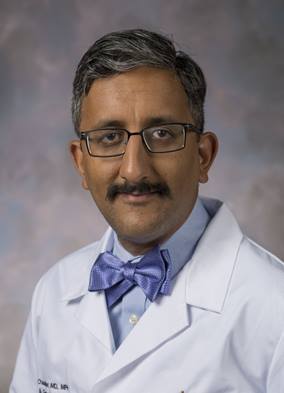
 

Bimal Chaudhari, MD, MPH

Nationwide Children’s Hospital

Columbus, OH


Bimal Chaudhari, MD, MPH, is a neonatologist, medical geneticist and translational informaticist. His clinical focus is on the application of rapid genome sequencing in acute and critical care settings. He is also an Associate Director of biomedical informatics at the NCH-OSU CTSA, chair of the Children's Hospital's Neonatal Consortium Genomics Focus Group, and chair of the American College of Medical Genetics and Genomics (ACMG) Systematic Evidence Review for Rapid Genome Sequencing in ICUs. Additionally, he is a clinical ethicist and a member of the Nationwide Children's and ACMG Ethics Committees as well as the Global Alliance for Genomics and Health Regulatory and Ethics Workstream.
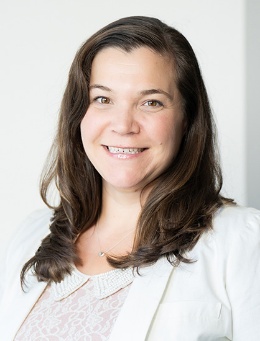


Rebecca Reimers, MD, MPH, FACOG, FACMGG

Rady Children’s Health

San Diego, CA


Rebecca Reimers, MD, MPH, FACOG, FACMGG is clinically trained in maternal-fetal medicine and clinical genetics at Brigham and Women’s and Boston Children’s Hospitals following an obstetrics and gynecology residency in the Harvard system. She currently practices pediatric genetics and perinatology, and does research related to diagnosing families at the earliest possible point with genetic conditions.
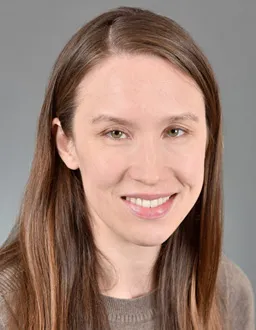


Monica Wojcik, MD, MPH

Medical Director, Manton Center Gene Discovery Core

Boston Children’s Hospital

Associate Professor of Pediatrics

Harvard Medical School

Boston, MA

 Monica Wojcik, MD, MPH, is a neonatologist and clinical geneticist at Boston Children’s Hospital and an associate professor in pediatrics at Harvard Medical School who specializes both clinically and academically in rare diseases affecting the fetus and neonate. Following her pediatric residency, she pursued combined fellowship training in both neonatology and genetics and subsequently obtained her Master of Public Health degree to augment her clinical effectiveness and health services research.

She currently serves as the Director of the Neonatal Genomics Program at Boston Children’s Hospital and the Medical Director of the Manton Center for Orphan Disease Research as well as the neonatology director in the Fetal Care and Surgery Center. Dr. Wojcik’s research focuses on the application of genomic medicine in the perinatal setting, particularly related to genetic diagnosis and clinical impact.
 

Translating Genes into Health Webinar Series Planners

Henry J. Mroczkowski, MD, PhD, FACMG (Chair)
University of TN Health Science Ctr

 Mari Mori, MD, MS, FACMG
The Ohio State University


Georgianne L. Arnold, MD, FACMG
University of Pittsburgh


Roya M. Mostafavi, MGC
University of Washington School of Medicine


Catherine A. Ziats, MD, FACMG
Cook Children's


Damara Ortiz, MD, FACMG
Children's Hospital of Pittsburgh of UPMC


Daniel Schecter, MD, MS
Mount Sinai School of Medicine


Staff

Jane Radford, MHA, CHCP
Senior Director of Education – ACMG


Kim Vadas, MABMH, CHCP, FACEHP
Senior Project Manager of Education, CME - ACMG

Accredited Continuing Education Information:

AMA PRA Category 1 CreditTM, ASCLS P.A.C.E.®


Accreditation

The American College of Medical Genetics and Genomics is accredited by the Accreditation Council for Continuing Medical
Education (ACCME) to provide continuing medical education for physicians.

Credit Designation
The American College of Medical Genetics and Genomics designates this live activity for a maximum of 1.0 AMA PRA Category 1 Credits™.
Physicians should claim only the credit commensurate with the extent of their participation in the activity.

The American Medical Association (AMA) defines physicians as those individuals who have obtained an MD, DO, or equivalent
medical degree from another country. Non-physicians may request a certificate of attendance for their participation.


ASCLS P.A.C.E.® CEU's 

ACMG is approved as a provider of continuing education programs in the clinical laboratory sciences by the American Society
for Clinical Laboratory Science (ASCLS) Professional Acknowledgment for Continuing Education (P.A.C.E.®) Program.

ACMG is approved by the Florida Board of Clinical Laboratory Personnel as CE Provider (50-11878). ACMG is approved by
the California Department of Health Services through the ASCLS P.A.C.E.® (275-200-26-08). This activity has been approved for 0.10 P.A.C.E.® CEU's.

Claiming your Educational Credits

Complete the activity and carefully complete the evaluation form. The deadline to claim educational credits is within 30 days
from the date of the activity. Educational credit requests after this date will not be accepted.


Learner Data Consent

ACMG Education reports learner data to respective agency boards and you will be asked for consent during the evaluation
process. Your compliance with deadlines and completing evaluations are part of the process in meeting learner needs and
ACMG’s education mission.


Technical Support:
You can reach us by email at education@acmg.net or call 301-718-9603.
Support Center Hours: Monday – Friday, 9:00 AM – 5:00 PM Eastern Time.


Accredited Continuing Education Financial Disclosure

The American College of Medical Genetics and Genomics (ACMG) is accredited by the Accreditation Council for
Continuing Medical Education (ACCME) to provide Accredited Continuing Education (ACE) for physicians. ACMG
is an organization committed to improvement of patient care and general health by the incorporation of genetics
and genomics into clinical practice.

ACMG has implemented the following procedures to ensure the independence of ACE activities from commercial
influence/promotional bias, the Accreditation Council for Continuing Medical Education (ACCME) requires that
providers (ACMG) must be able to demonstrate that: 1) everyone in a position to control the content of an ACE
activity has disclosed all financial relationships that they have had in the past 24 months with ineligible* companies;
2) ACMG has implemented a mechanism to mitigate relevant financial relationships; and 3) all financial relationships
with ineligible companies are disclosed to the learners before the beginning of the educational activity. The learners
must also be informed if no relevant financial relationships exist.

*Ineligible companies are defined as those whose primary business is producing, marketing, selling, re-selling,
or distributing healthcare products used by or on patients.

All relevant financial relationships listed have been mitigated.

Name

Role: Presenter/Panelist/Moderator/ Liaison/Planner/Peer Reviewer

Financial Disclosure for 24 Months (relationship is ongoing unless stated)

Jennifer Cohen, MD

Presenter

Pending

Bimal Chaudhari, MD, MPH

Presenter

Nothing to Disclose

Rebecca Reimers, MD, MPH, FACOG, FACMGG

Presenter

Pending

Monica Wojcik, MD, MPH

Moderator, Planner

Pending

Roya M. Mostafavi, MGC

Planner

Nothing to Disclose

Henry J. Mroczkowski, MD, PhD, FACMG

Planner

Nothing to Disclose

Damara Ortiz, MD, FACMG


Planner


Research Grant: Amicus Therapeutics, Freeline Therapeutics, GC Biopharma,
Sanofi and Genzyme US Companies, Uniqure

Daniel Schecter, MD, MS

Planner

Nothing to Disclose

Catherine A. Ziats, MD, FACMG

Planner

Nothing to Disclose

Jane Radford, MHA, CHCP

Staff

Nothing to Disclose

Kim Vadas, MABMH, CHCP, FACEHP

Staff

Nothing to Disclose


Disclaimer

ACMG educational programs are designed primarily as an educational tool for healthcare professionals who wish to increase their understanding of the application of genomic technologies to patient care. The ACMG does not endorse or recommend the use of this educational program to make patient diagnoses, particularly by individuals not trained in medical genetics. Adherence to the information provided in these programs does not necessarily ensure a successful diagnostic outcome. The program should not be considered inclusive of all proper procedures and or exclusive of other procedures and that are reasonably directed at obtaining the same results. In determining the propriety of any specific procedure or, a healthcare professional should apply his or her own professional judgment to the specific clinical circumstances presented by the individual patient or specimen.

© American College of Medical Genetics and Genomics. All rights reserved.

Powered By